Norlender - A Benchmark for Norwegian Sweaters
/Note: At our request, Norlender kindly agreed to send us the sweater featured in this article.
Norlender
Norwegian sweaters
We have briefly discussed Norwegian sweaters on the blog before. But any serious discussion on the history of Norwegian knitting must begin with the work of Annemor Sundbø, often nicknamed the "Norwegian Sweater Detective."
Her contribution doesn't just come from documentary research. In 1983, Sundbø acquired the "Torridal Tweed og Ulldynefabrikk," a "shoddy" factory (wool recycling) in Norway. Inside, she discovered what she calls a "rag pile": tons of old wool sweaters, mittens, and underwear destined to be shredded for padding or moving blankets.
This pile of rags became an invaluable "archaeological" source. By analyzing thousands of fragments before their destruction, Sundbø was able to trace the evolution of patterns, dyeing techniques, and repair habits over several centuries. Her monumental book, Norway's Knitted Heritage, is the result of this research. She demonstrates that Norwegian knits are repositories of cultural data, recording everything from funeral customs to nation-building after the Napoleonic Wars.
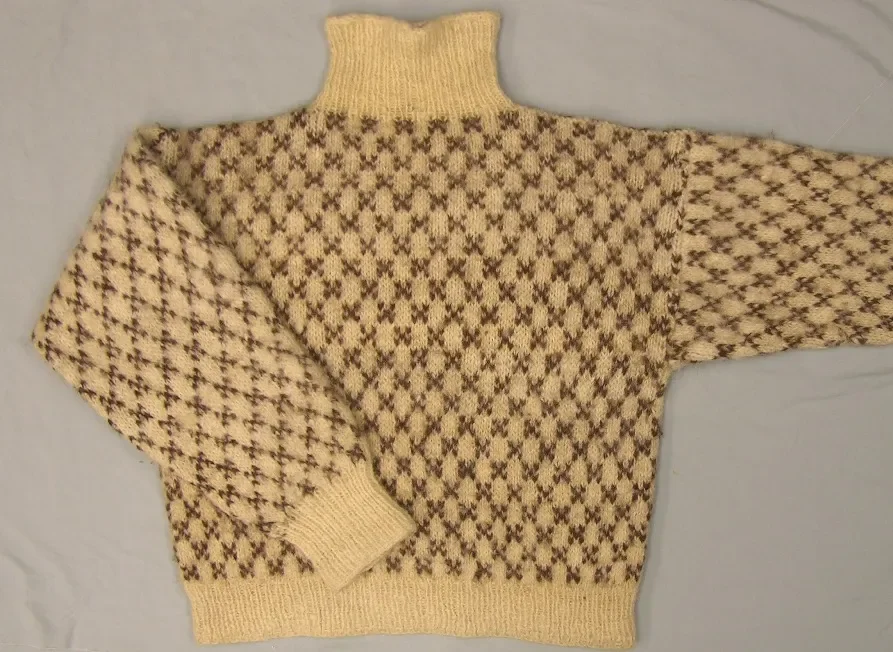
Although often used interchangeably, the terms "Islender" and "Lusekofte" actually designate two different types of sweaters.


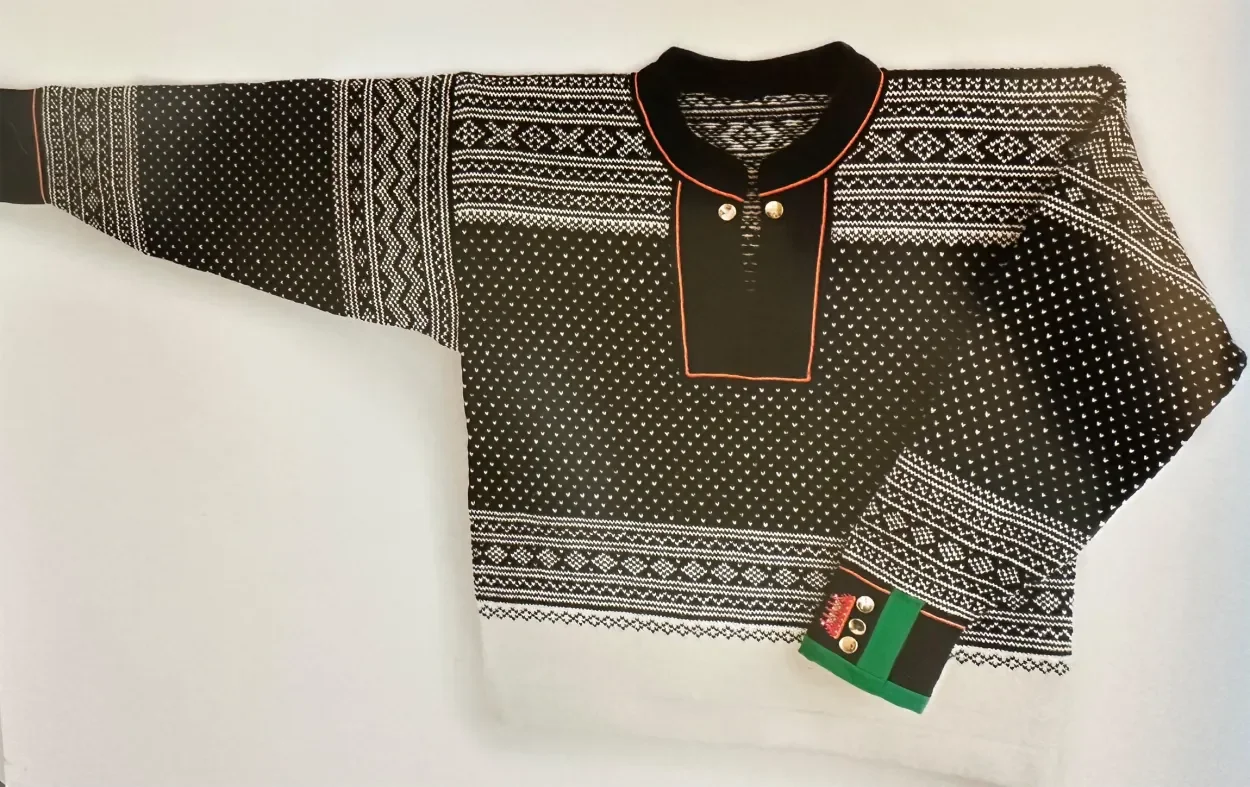
The Setesdal Lusekofte
To better understand the Norlender Svalbard sweater we discuss below, we must briefly mention the Setesdal Lusekofte.
Historically associated with the Setesdal Valley, the Lusekofte is a garment of prestige, a marker of social status. With its colorful embroidery (Løyesaum) and silver clasps, it is designed for ceremonies and folk costume (bunad). It is characterized by the "lice" pattern—isolated stitches in a contrasting color.
The Islender
Contrary to what its name suggests, the Islender (the style that inspires the Svalbard) does not necessarily come from Iceland. According to research by Laurann Gilbertson in the Norwegian Textile Letter, the name likely refers to the trade routes of the 'Iceland Company' linking Norwegian ports to the Faroe Islands in the 19th century.
It is the quintessential work garment. Unlike the Lusekofte with its fragile embroidery, the Islender is strictly utilitarian. Its repetitive pattern creates a constant double thickness of wool throughout the body, acting as true thermal armor.
The Svalbard Sweater by Norlender
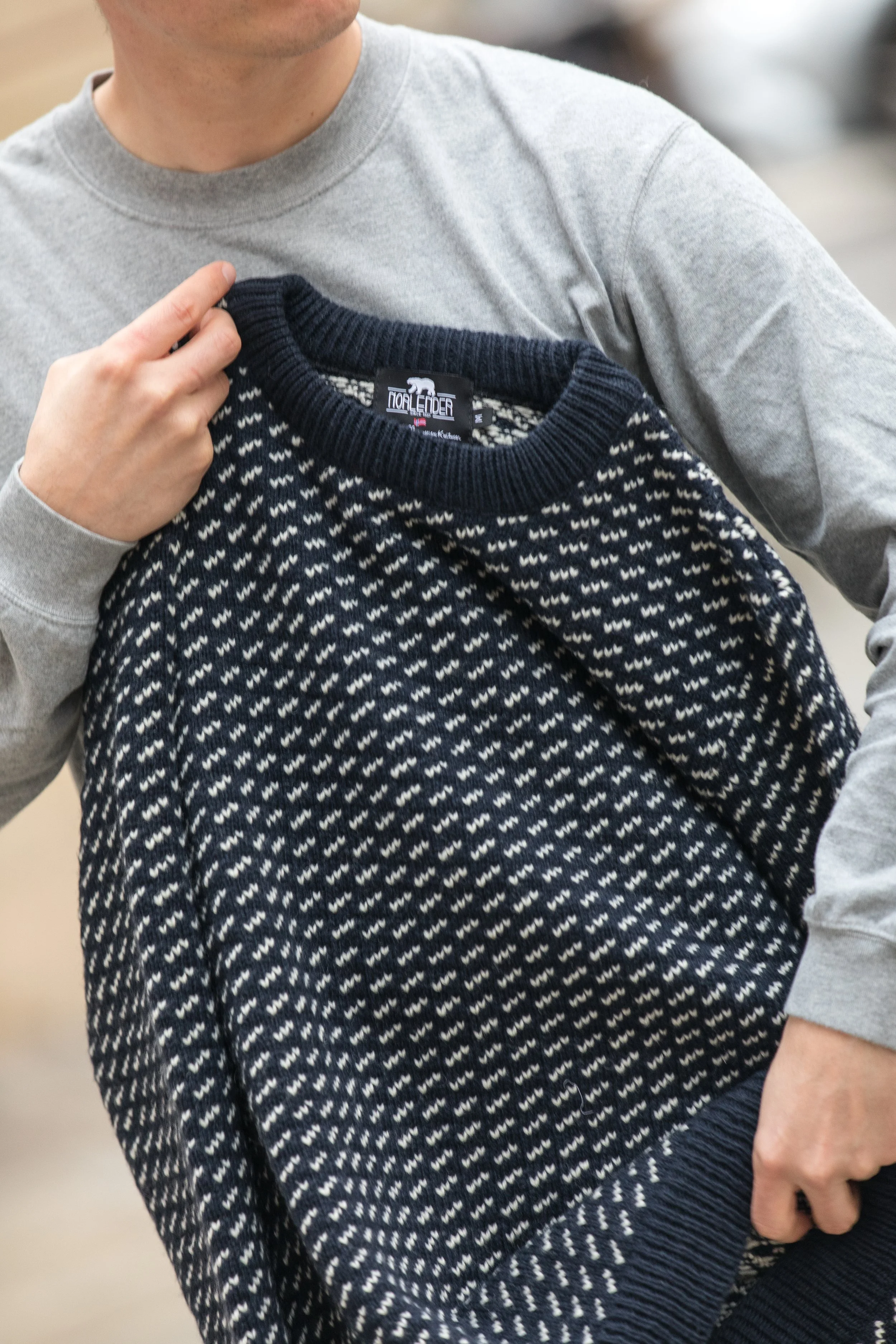
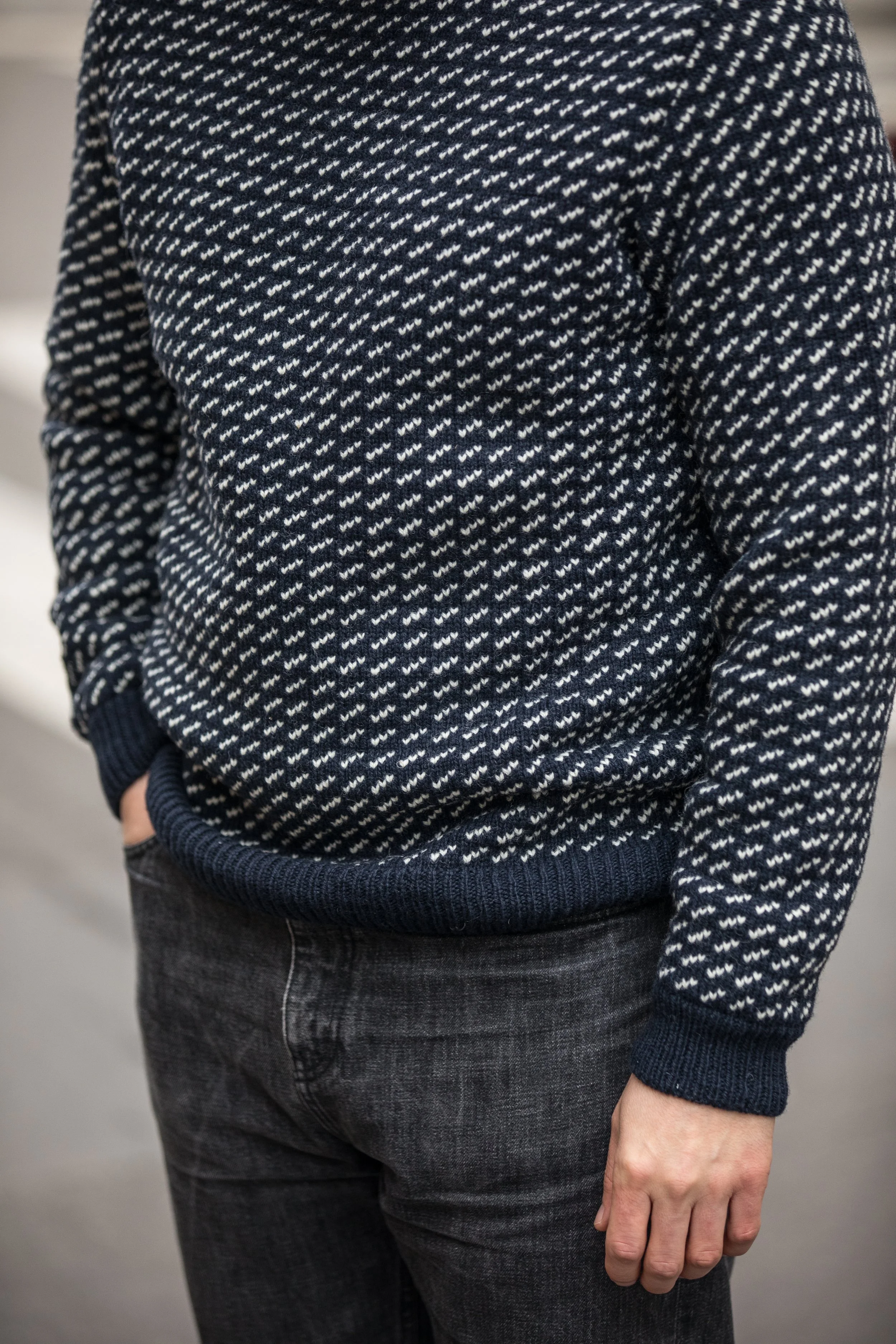
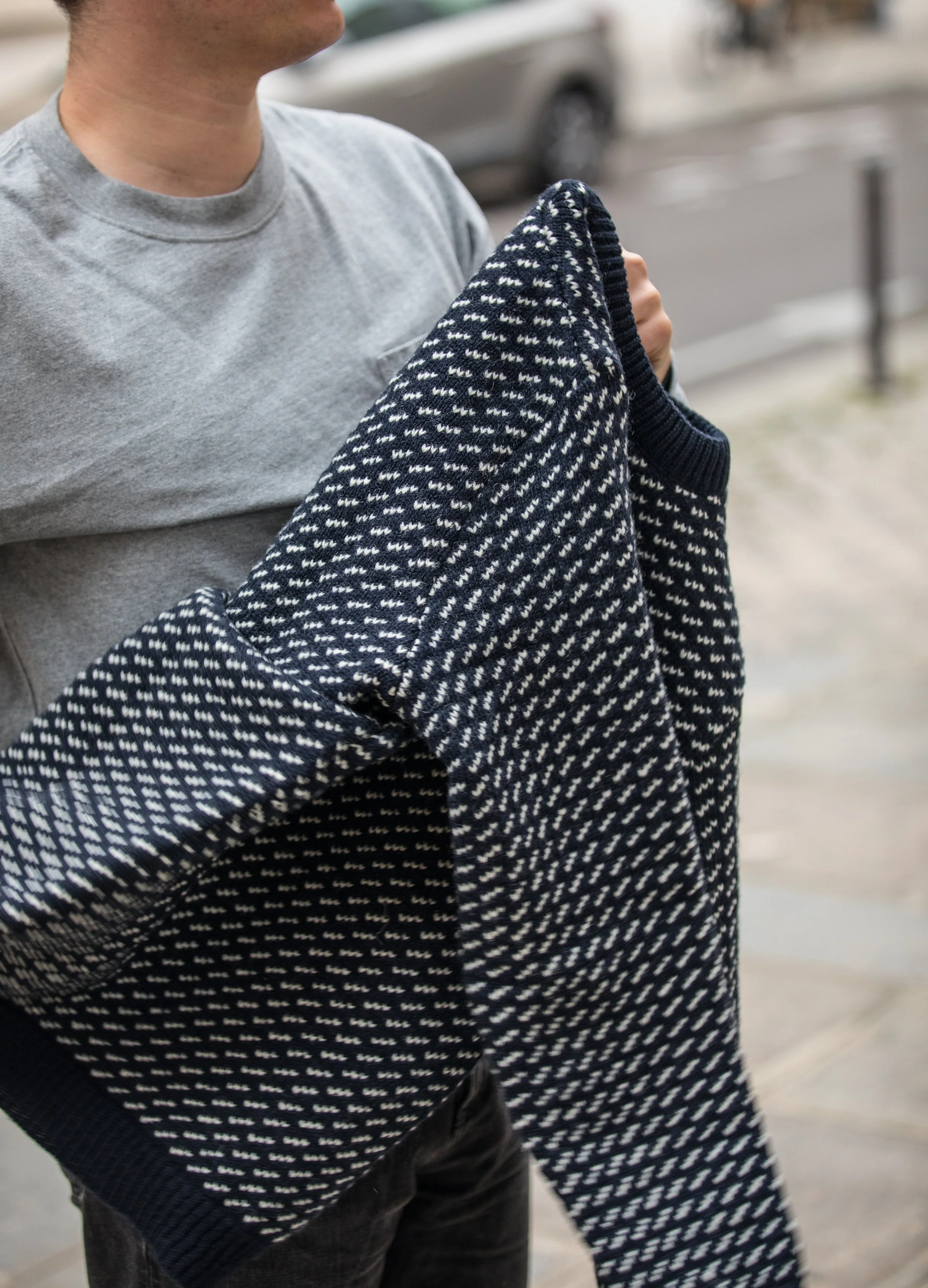
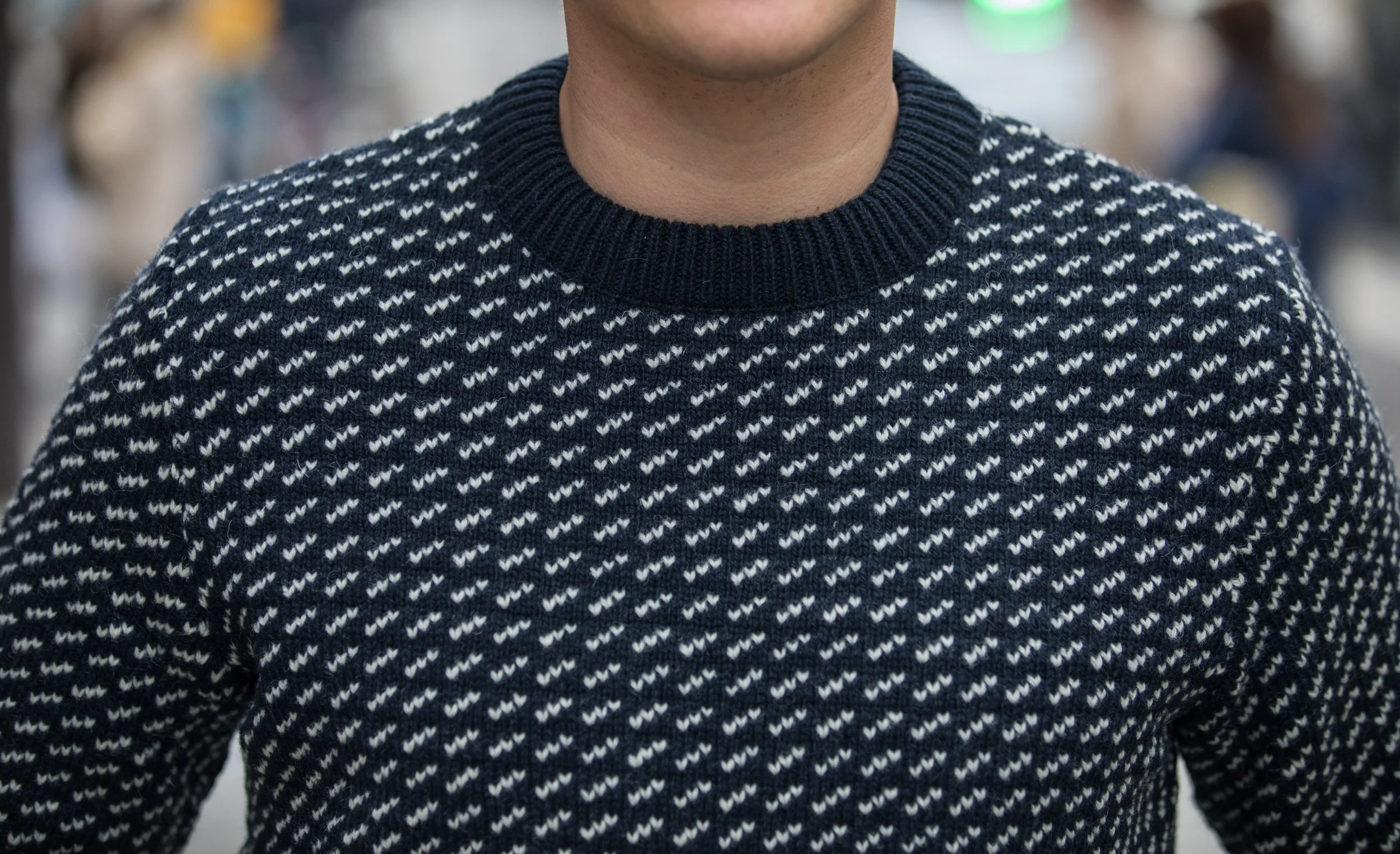
I was able to test the Svalbard model from Norlender, which is a typical Islender-type sweater. It features a small "triple Lusekofte" (or "triple lice") pattern.
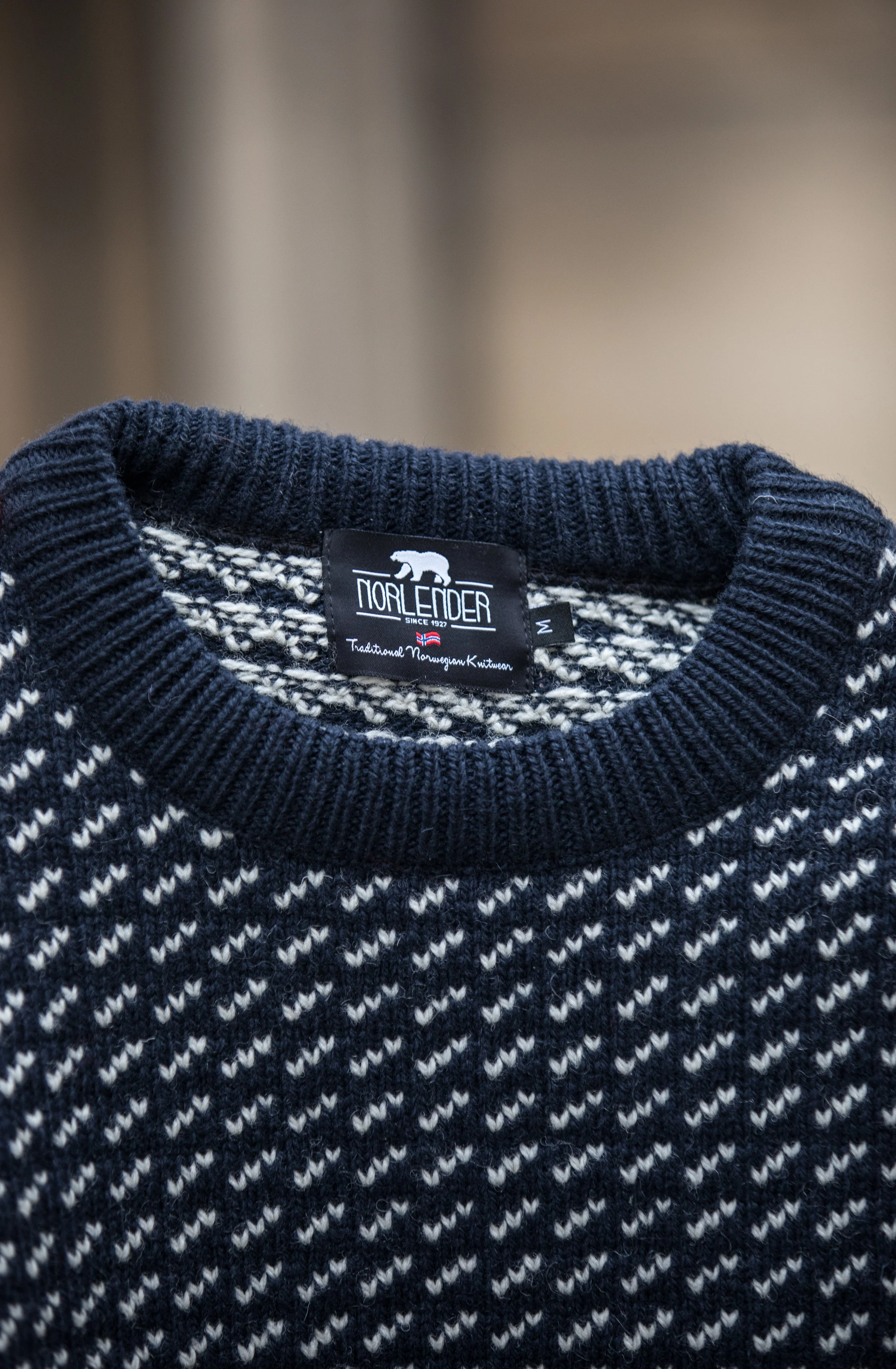
Why three motifs? In a maritime culture steeped in superstition and piety, the number three has strong symbolic resonance (the Trinity), often invoked for protection at sea. A more probable and pragmatic explanation lies in the knitting structure. Grouping three motifs allows for optimal management of "floats" (the threads running along the back of the work). Floats that are too long risk getting snagged.
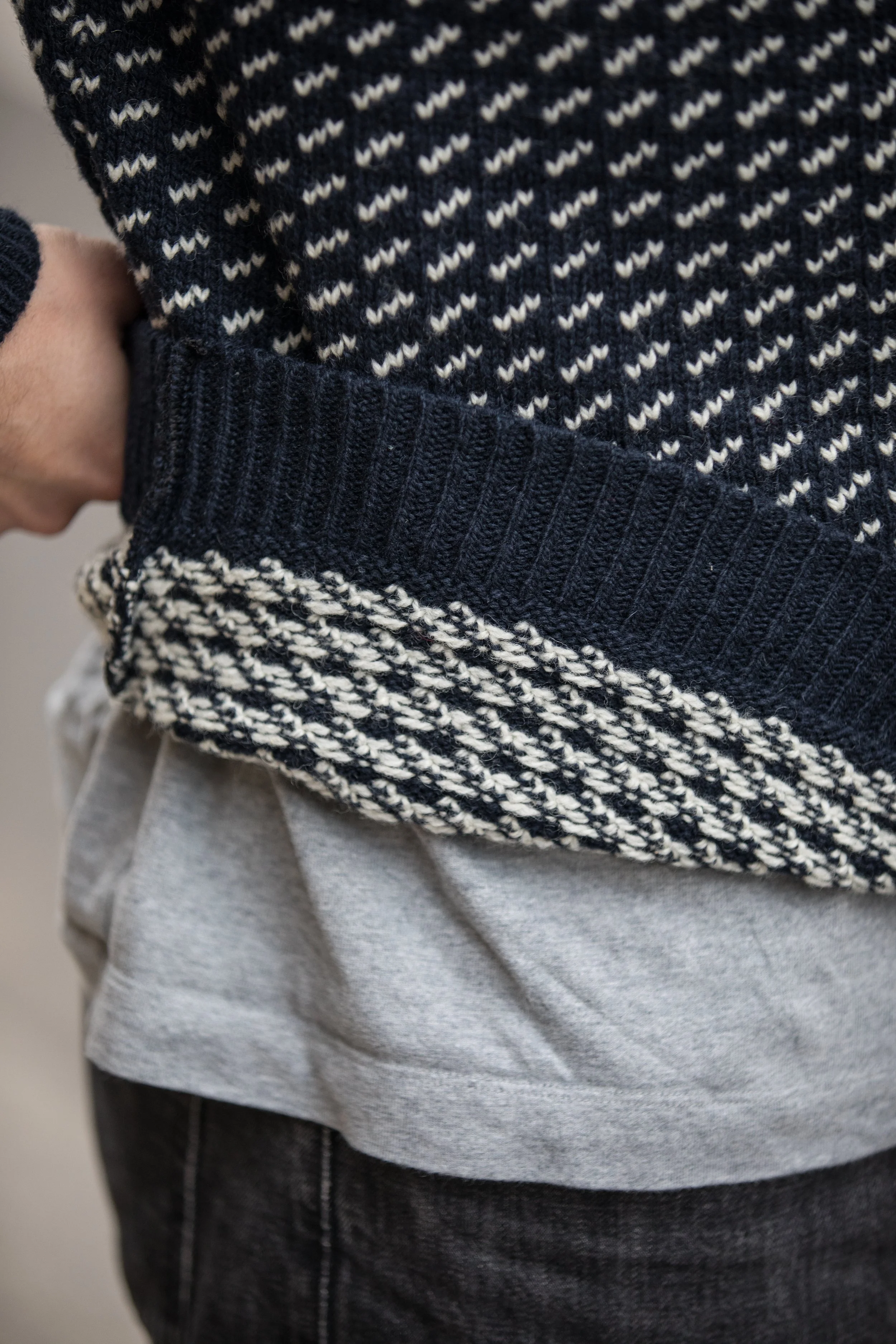
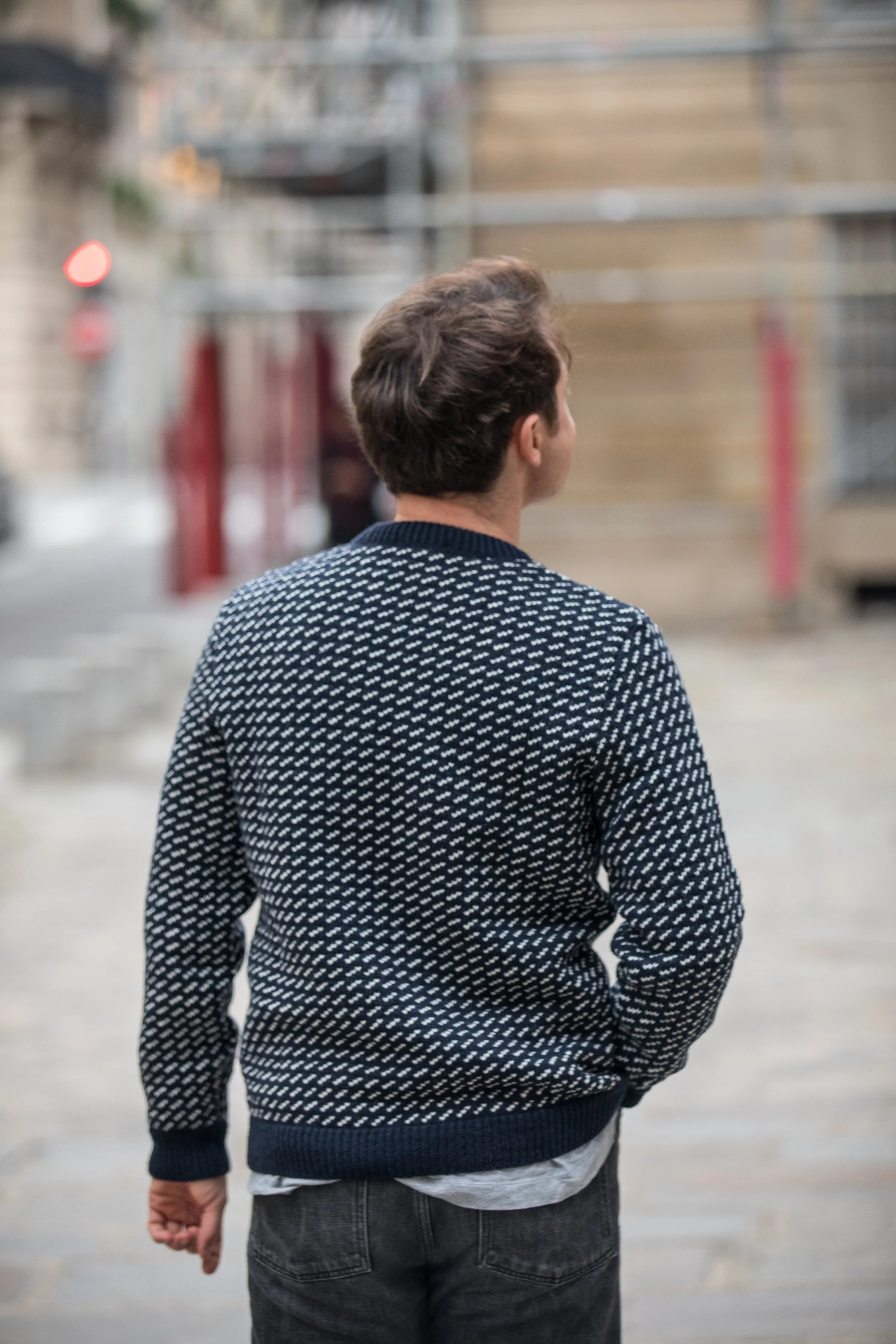
You can distinguish the floats on the reverse side of the sweater.
It was this "triple lice" pattern that was popularized internationally by retailers like L.L. Bean between 1965 and 1990, cementing the image of the "Norwegian Fisherman Sweater" in the global collective imagination before production was massively outsourced to Asia.
The Norlender Svalbard therefore represents a return to the source of this menswear icon. The wool, the yarn, and the knitting: everything in this sweater is 100% Norwegian.
The Manufacturing
Located on the island of Osterøy, the historic cradle of Norwegian textiles, Norlender embodies a rare industrial resilience.
The story begins in 1927 under epic conditions: lacking a passable road, founder Ola Tveiten had to hoist his first knitting machine onto a horse-drawn sled to install it in the basement of his mountain farm. Initially named "Svale Trikotasje" and dedicated to underwear, the company pivoted to robust outdoor sweaters after 1945.
Today, while the majority of global brands have offshored their production, the third and fourth generations of the Tveiten family maintain operations on their home fjord, making Norlender one of the last bastions of "Made in Norway."
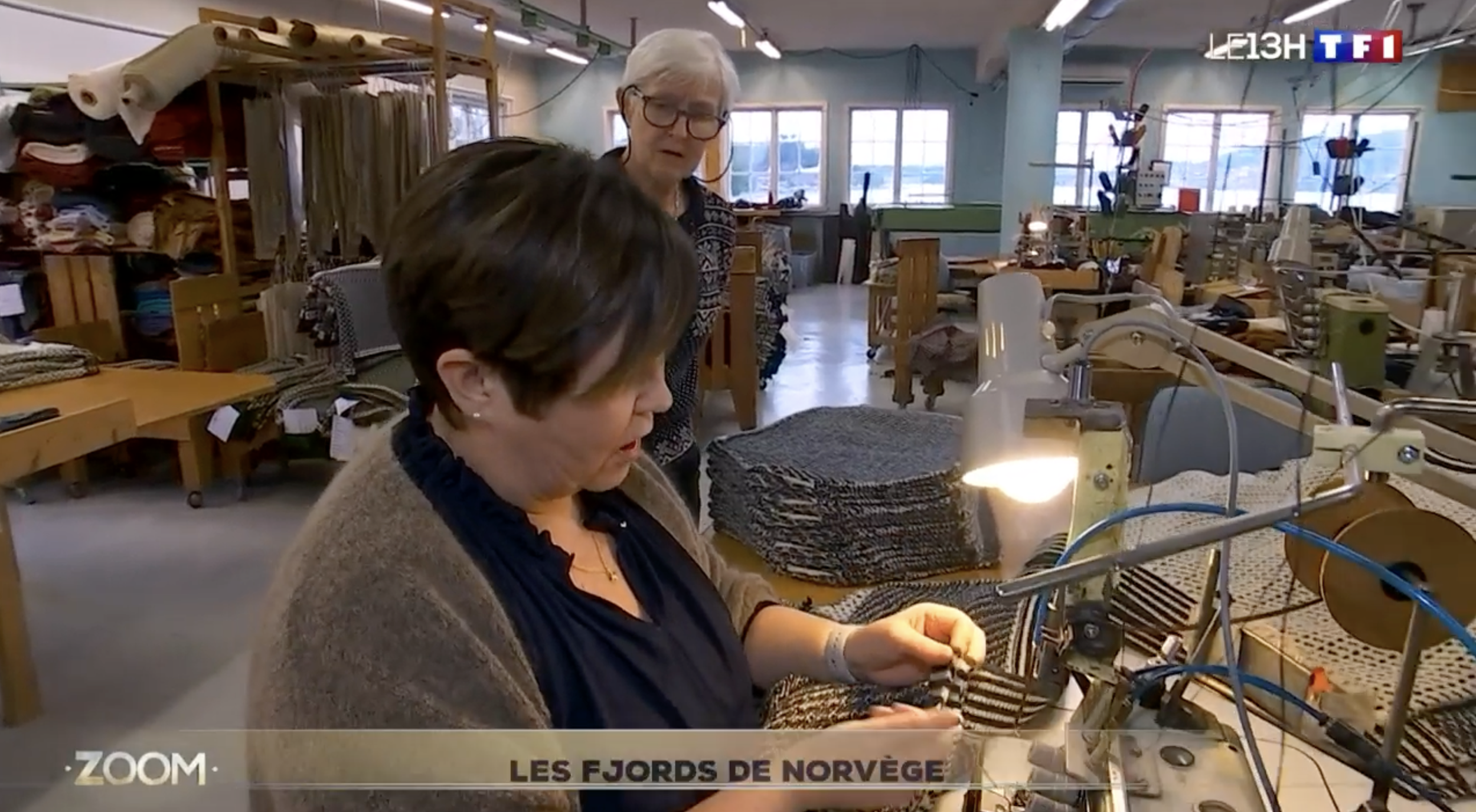
Screenshot from a TF1 report on the Fjords of Norway, which included a visit to the Norlender brand
Construction Details
The sweater is "cut-and-sew," much like our French marine sweaters (Saint James, etc.). Unlike "fully fashioned" knitting, where each panel is knitted to the exact shape (visible by converging stitches at the armholes), the Svalbard is produced using the integral panel technique.
Large rectangular panels featuring the pattern are knitted on flatbed machines, before the body and sleeve shapes are cut from these panels. The raw cut edges are secured by an overlocker (serger) to prevent unraveling. This process mechanizes the traditional Norwegian "steeking," which consisted of hand-knitting in the round and then cutting the armholes with scissors.
This creates thick, visible interior seams. While less refined than linking, they undoubtedly provide essential structural rigidity. For a 900g sweater, these seams act as an armature, preventing the heavy carded wool knit from deforming or stretching excessively under its own weight over the years.
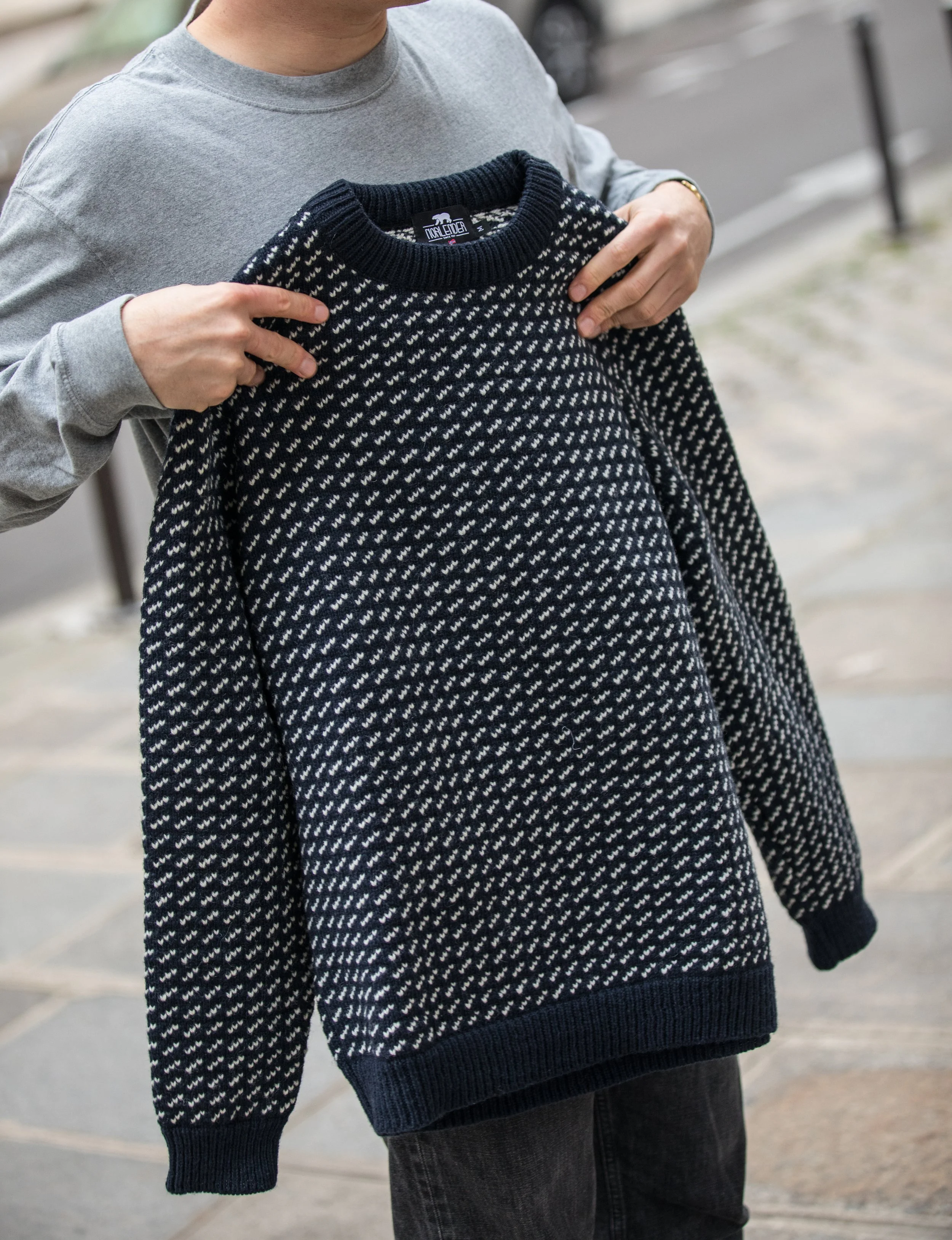
he Raw Material – Norwegian Wool
A sweater is only as good as the yarn it’s made of. Norlender Knitwear, while a knitting factory, does not spin its own wool. The company relies on an ecosystem of spinners and farmers located on the west coast of Norway, guaranteeing total traceability.
The first impression is that of a rustic piece—very thick and warm—but it doesn't scratch as much as I had imagined. This is no accident; here we are dealing with wool classified C1 by the Norwegian standard Animalia.
Concretely, this means two things:
A thick fiber (28-38 microns): Although the micron count is high, carding introduces so much air (loft) that the surface of the sweater feels like a cloud. The fibers, instead of pricking the skin like needles (which coarse worsted wool would do), compress and bend thanks to their natural elasticity. The sweater acts as a cushion rather than chainmail.
Autumn shearing (Høstull): Unlike spring wool which has suffered from a winter in the barn, autumn wool has grown in the open air. It is clean, strong, and gorged with natural lanolin to protect the sheep from rain.
It is this raw material that the brand's historic partner, Sandnes Garn (a Norwegian spinner founded in 1888), prepares and washes while preserving this raw character. The distinctive scent immediately signals the residual presence of lanolin. The washing process at Sandnes Garn is calibrated to clean the wool without chemically "stripping" it. Lanolin is the sheep's natural wax; it provides natural water repellency and prevents dirt from penetrating the fiber.
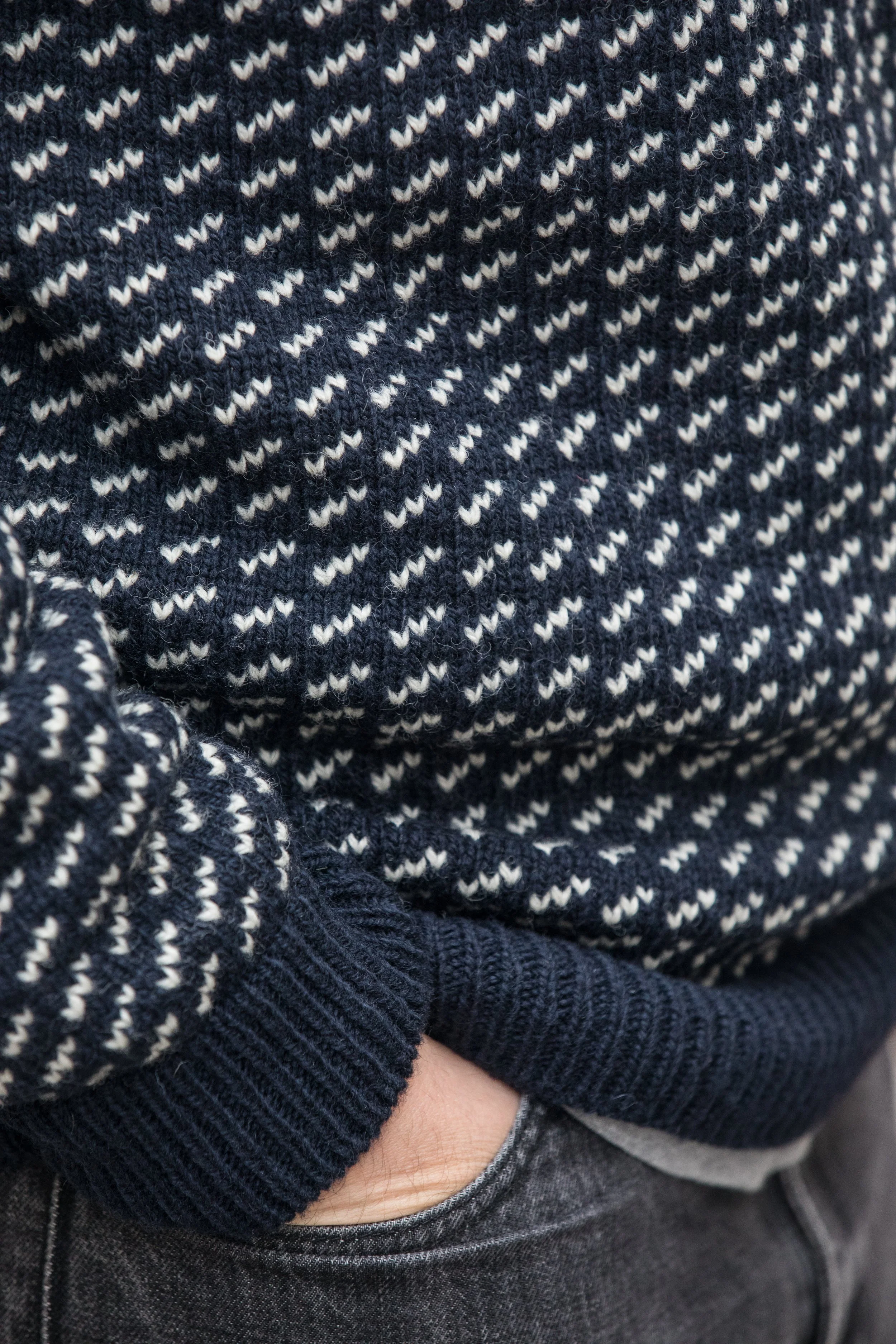
How to Wear It?
A key point to keep in mind is its weight of almost 1kg. For comparison, a standard cashmere sweater weighs about 300g. The Svalbard is three times heavier. It functions like a storage heater, storing body heat within the crimped structure of the fiber.
This weight dictates its usage somewhat. It is not a mid-layer to be worn under a fitted jacket; one could almost consider it outerwear. Historically, the Islender was worn over several layers of underwear, acting as the final barrier against the cold.
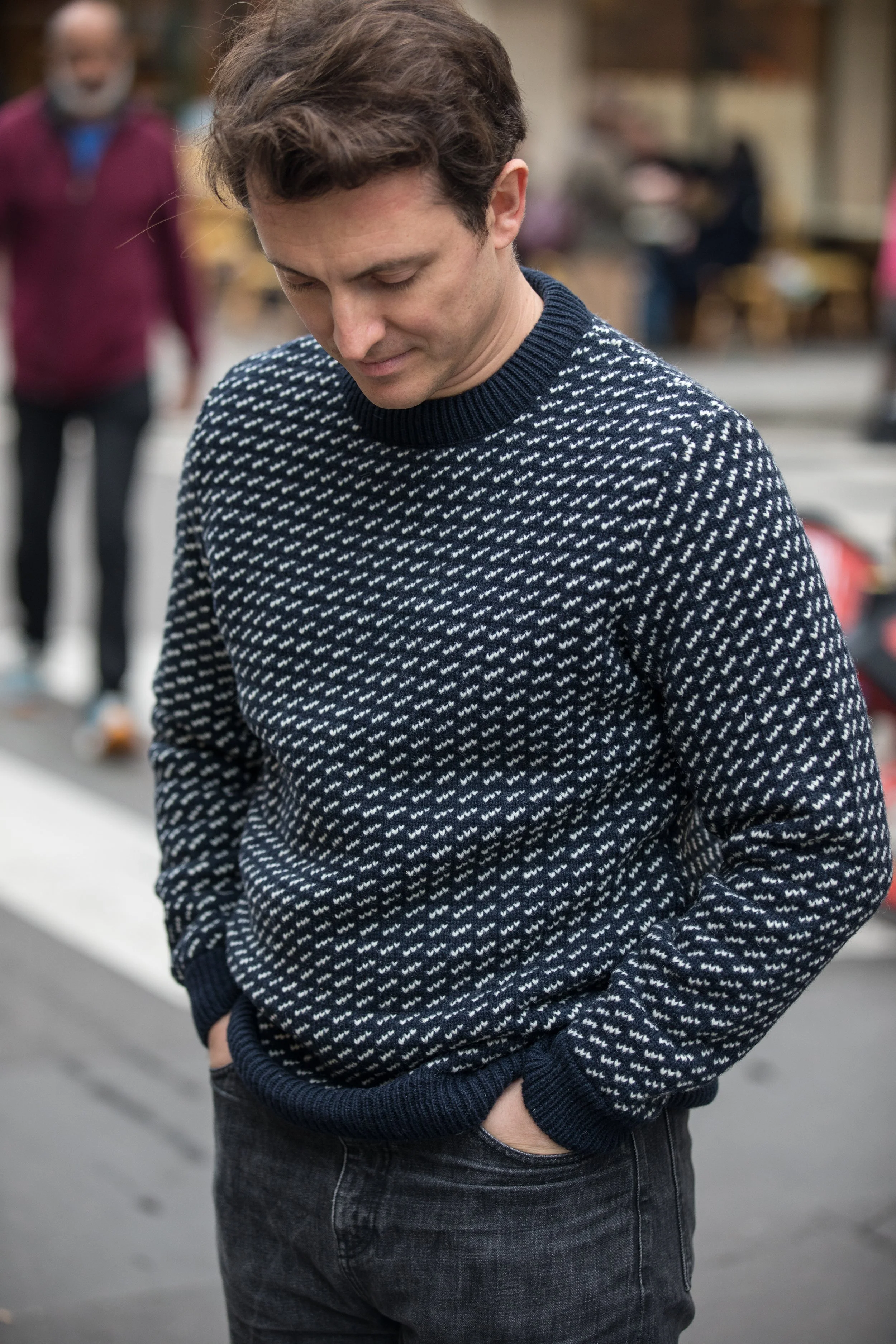
Personally, I wear it simply, here with jeans from See Fan and Paraboot x Arpenteur boots. I could have added a loose raglan coat, but the weather didn't call for it that day.
For those who are curious, the sweater is available here.
Note: I am wearing a size M.